Designing a Home Around How to Actually Live
The best homes aren't designed for photographs alone. They're designed around the routines, habits, and people who will inhabit them.
Category:
Living
6
min read
Charlotte Morgan
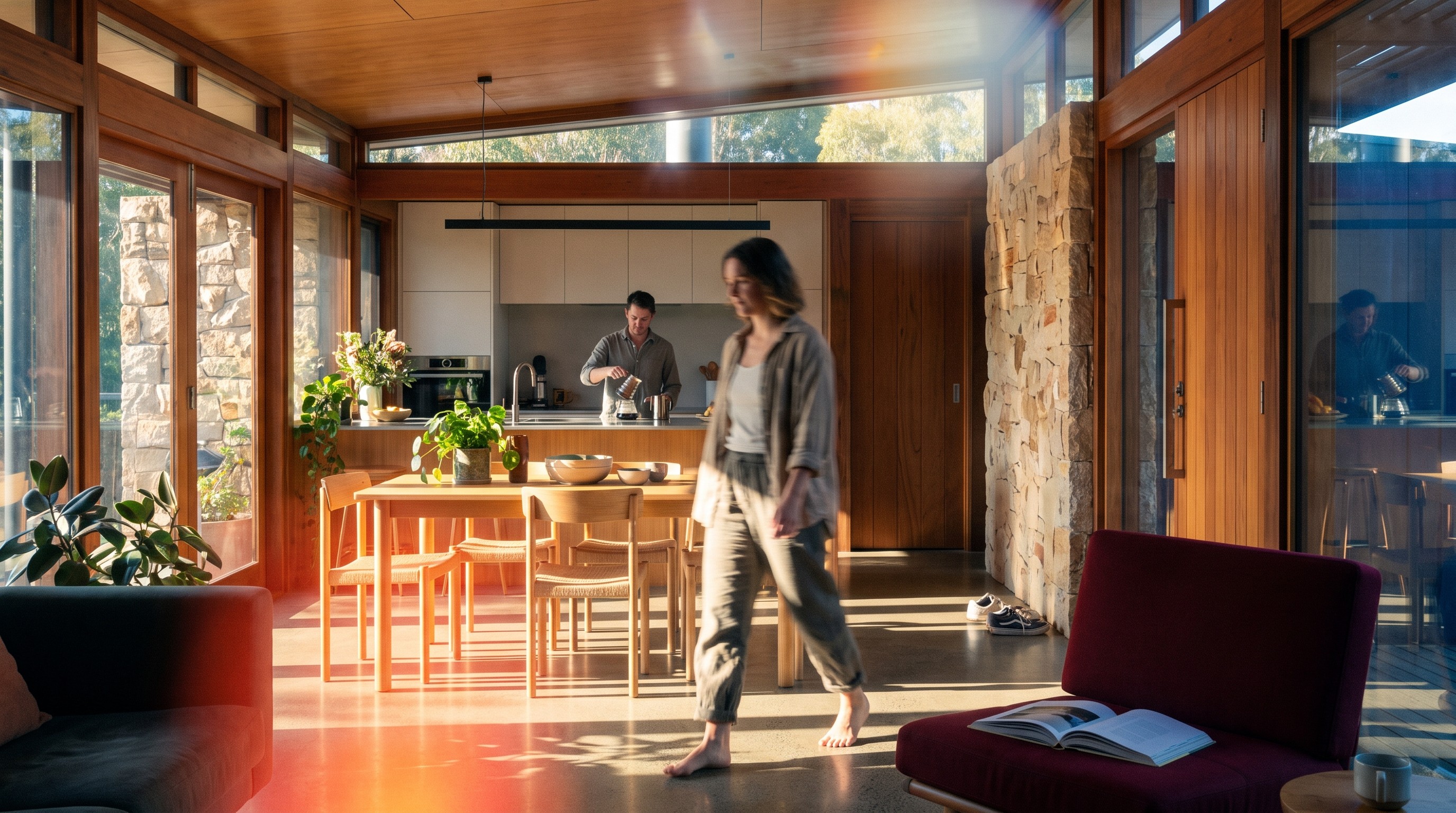
Photography by Havyn
Est 2014

A beautifully designed home can still feel wrong if it doesn't support the way you live.
Good residential design starts with a deceptively simple question: what actually happens here?
The answer should influence everything from the floor plan to the placement of lighting and storage.
Begin with routines
Before choosing finishes or furniture, think about your daily patterns.
Where do you leave your keys? Where do you take off your shoes? Where does the morning light come in? Do you eat at the kitchen island or around a dining table?
These small questions reveal how a home needs to function.
Design for movement
The best floor plans often feel intuitive because they make movement easy.
Frequently used spaces should connect naturally. Storage should be located where the things it contains are actually used. Outdoor areas should feel like extensions of the rooms they connect to.
Good design reduces unnecessary friction.
Create different kinds of space
A home shouldn't require every room to perform the same function.
Open living areas are excellent for gathering, but people also need somewhere quiet to work, read, rest, or be alone.
Creating a mixture of open and enclosed spaces gives a home flexibility without making it feel fragmented.
Don't underestimate storage
Storage is architecture too.
Built-in cabinetry, concealed utility spaces, window seats, wardrobes, and carefully planned kitchens can make a home feel calmer without adding visual clutter.
The less frequently used objects disappear, the more attention can be given to the spaces themselves.
Let the materials tell a story
Materials should support the way a home is used.
Durable stone works well in kitchens. Timber can add warmth to living spaces. Textured finishes can introduce depth without relying on decoration.
The goal isn't to choose the most expensive materials. It's to choose materials that make sense.
Design for change
A home should be able to evolve.
Children grow. Work arrangements change. Furniture moves. Priorities shift.
Flexible rooms and adaptable layouts allow a property to remain useful even as its occupants change.
The home should feel like you
Ultimately, good residential design isn't about creating a perfect image.
It's about creating an environment that supports a particular life.
The most successful homes don't tell their occupants how to live.
They make living easier.

